
Operation Pollination: 12 Days of Transformation
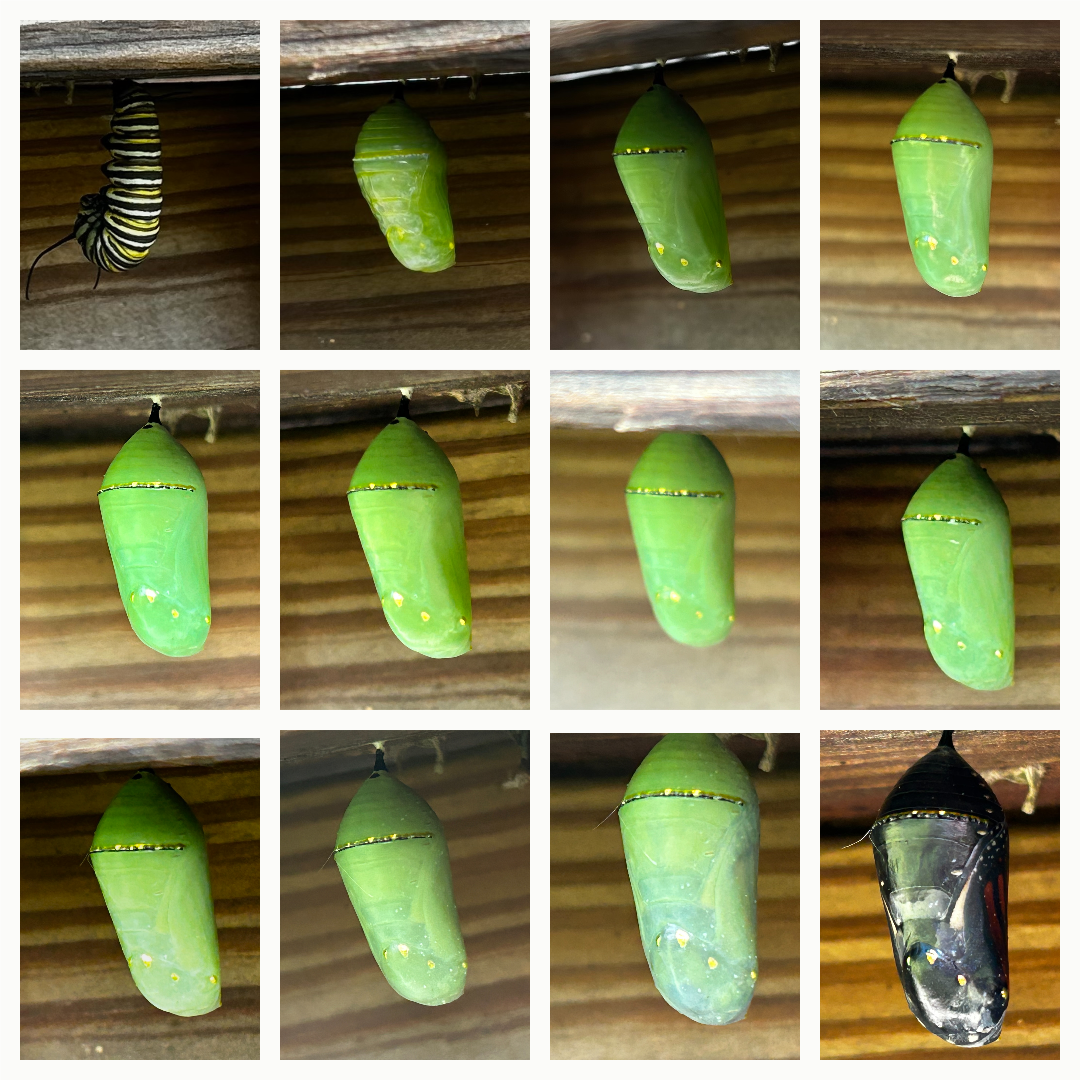
Elayne Bozic provided pictures of a Monarch going through metamorphosis on her front porch.
The Transformation Process
It takes 10-14 days for an adult monarch butterfly to form in the chrysalis, warmer whether speeds up the process, while cooler weather slows it down.
The "J" Shape is the first stage, where the fully grown caterpillar stops eating and hangs upside down from a secure surface looking like the letter J.
On around Day 2 the caterpillar’s skin drops off revealing a soft bright green chrysalis.
The Hardening phase takes a few hours to transform the soft casing into a hardened waxy shell.
The Clear stage seems like a misnomer, because the colour of the shell looks black and orange, however the shell becomes clear a day or two before the change is complete and what you’re seeing is the black and orange patterns of the butterfly’s wings through the casing.
Once hatched the Monarch Butterflies will migrate south to warmer climates. In Ohio, the friends of the National Wildlife Refuge are hosting Monarch hikes around Port Clinton and Oak harbor, so visitors can have a chance to view the butterflies as they start on this journey. During the day the butterflies fly individually, but keep your eyes peeled for roosting monarchs at night as they gather in trees together in the hundreds and even thousands.
What can we do to help our Monarch Butterfly friends as they prepare for their long journey? Leave your late-blooming flowers in place until after the first frist, that way migrating Butterflies will have plenty of nectar to fuel themselves for their trip.